First Friday, August 7, 2026 at Maine Art Collectives
The emerging artists of the Maine Art Collective want to meet you!!!
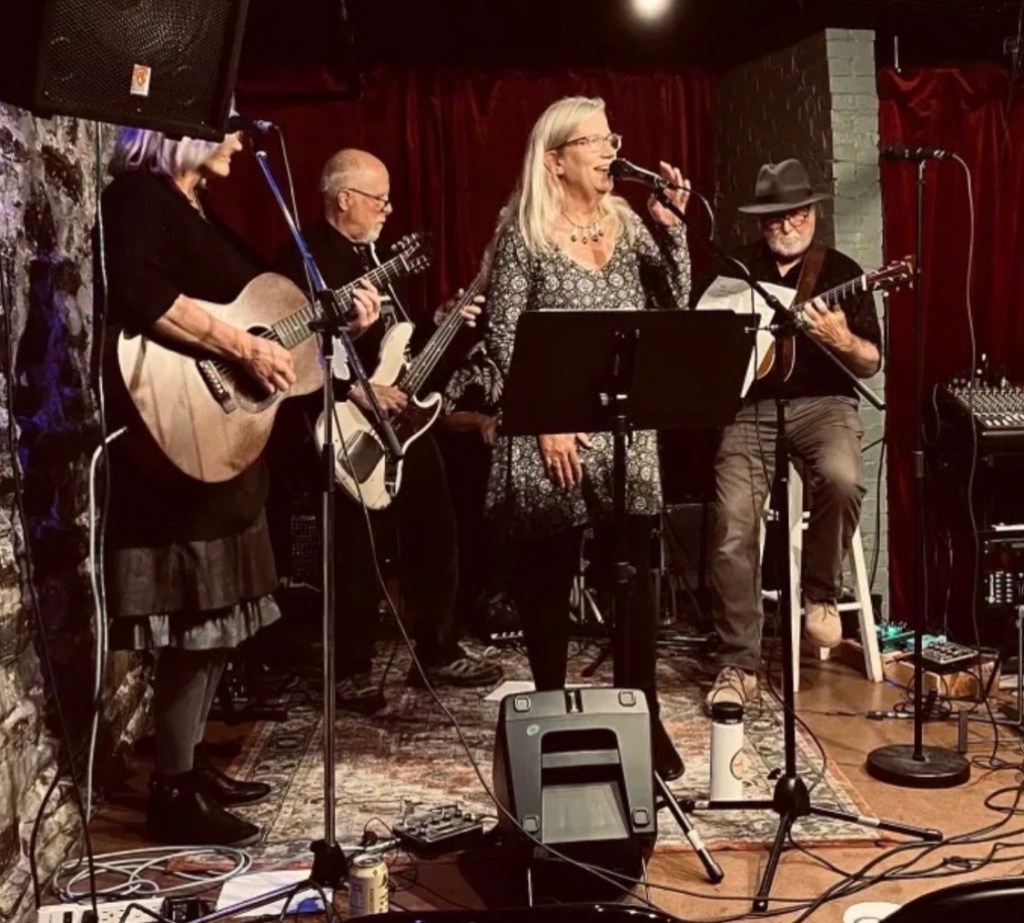
So, we’ve invited a band to share in the delight of their music, and we are inviting you to join in the festivities, refreshments and the art and craft of twenty-three local artists at the Maine Art Collective, 157 Middle Street, Portland, Maine from 5-7:30 PM on August 7.
Listen to the Honey Tones perform a sweet blend of vocal harmonies and groove instrumental accompaniment. Each member brings different musical styles to the band ranging from swing, blues, jazz, and folk songs from various genres and instrumental ensembles.
The band’s sound is best described as an eclectic mix of popular and lesser-known “rooty”, blues, swing and R&B songs from various genres. Their set list includes a pleasing combination of original, old, new, and undiscovered tunes just right for any occasion.
Screenshot
To learn more about the Honey Tones, go here: Honey Tones
Meet local artists showing their wide range of work, partake of refreshments and drinks and rest your eyes of our delightful artwork.
Screenshot
Artist and harmonica player, David Finley joined the Maine Art Collective this year and he’ll show you to his work before he joins the Honey Tones for a few songs. More about Dave in his own blog.
Maine Art Collective has two Portland locations, this is our Middle Street Event, our 9 Moulton Street location will also be hosting a First Friday event.
Join Us for a Talk & Walk with Abigail Dunnigan: Why Maine? Then and Now
Jen Pope Islands Acrylic
What drew artists to Maine more than a century ago? And why do artists continue to find inspiration here today?
The Maine Art Collective invites you to explore these questions during a special Talk & Walk led by Abigail Dunnigan, art historian and graduate student in Museum Studies at Georgetown University.
The program begins with a brief five-minute talk examining the reasons artists first flocked to Maine’s shores. Following the presentation, visitors will have the opportunity to walk through the gallery with Abby and see artists the unique connection between Maine’s artistic past and its vibrant creative present.
Jen Pope Growing Wings Acrylic 15 x 30
Meet Abigail Dunnigan
Abigail Dunnigan earned her Bachelor’s degree in Art History from the University of Southern Maine in 2024 and is currently pursuing graduate studies in Museum Studies at Georgetown University.
Her academic work has focused extensively on Maine art and museum practice. As an undergraduate, Abby served as a research assistant for the exhibition Shifting Sands: Beaches, Bathers, and Modern Maine Art at the Ogunquit Museum of American Art. Her research explored artists such as Reginald Marsh and George Bellows and their connections to Maine’s coastal communities, tourism, and leisure culture in the early twentieth century.
She has also worked with the Smithsonian Center for Folklife and Cultural Heritage, where she conducted object research, collections management, cataloging, and exhibition writing. Her experience combines rigorous scholarship with a passion for making art history accessible and engaging to the public.
Why Did Artists Come to Maine?
Long before Maine became a popular tourist destination, artists were discovering something extraordinary here.
The state’s distinctive northern light, rugged coastline, mountains, forests, islands, and working waterfronts offered subjects unlike those found elsewhere in America. They were drawn by the dramatic landscapes from the mountains to the North Atlantic, the changing weather, and the opportunity to capture a place that felt both wild and authentic.
The artists were drawn to Ogunquit, Katahdin and Monhegan Island, soon the word spread. The first artist colony was founded in Ogunquite. More painters arrived, followed by writers, photographers, and craftspeople who found endless inspiration in Maine’s natural beauty and unique character.
Why Do Artists Still Come to Maine?
The reasons have changed surprisingly little.
Today’s artists continue to be inspired by the same golden light, expansive coastlines, island communities, wetlands, mountains, and forests that captivated earlier generations. Maine remains a place where creativity flourishes because the landscape constantly offers something new to observe, interpret, and share.
At the Maine Art Collective, visitors can see how contemporary artists continue this tradition. While their styles, materials, and perspectives may differ from those of the early painters, many are responding to the same environment that first attracted artists to Maine over a century ago.
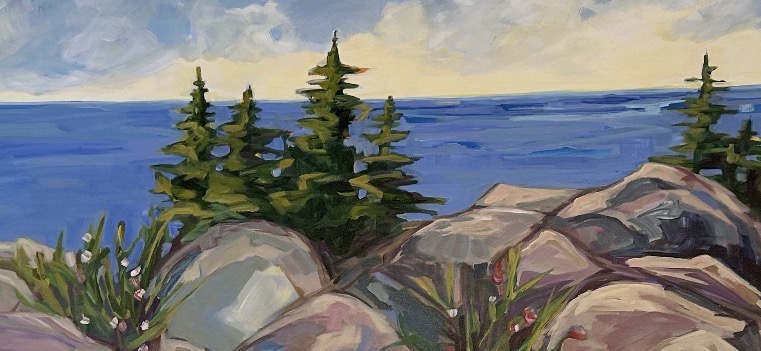
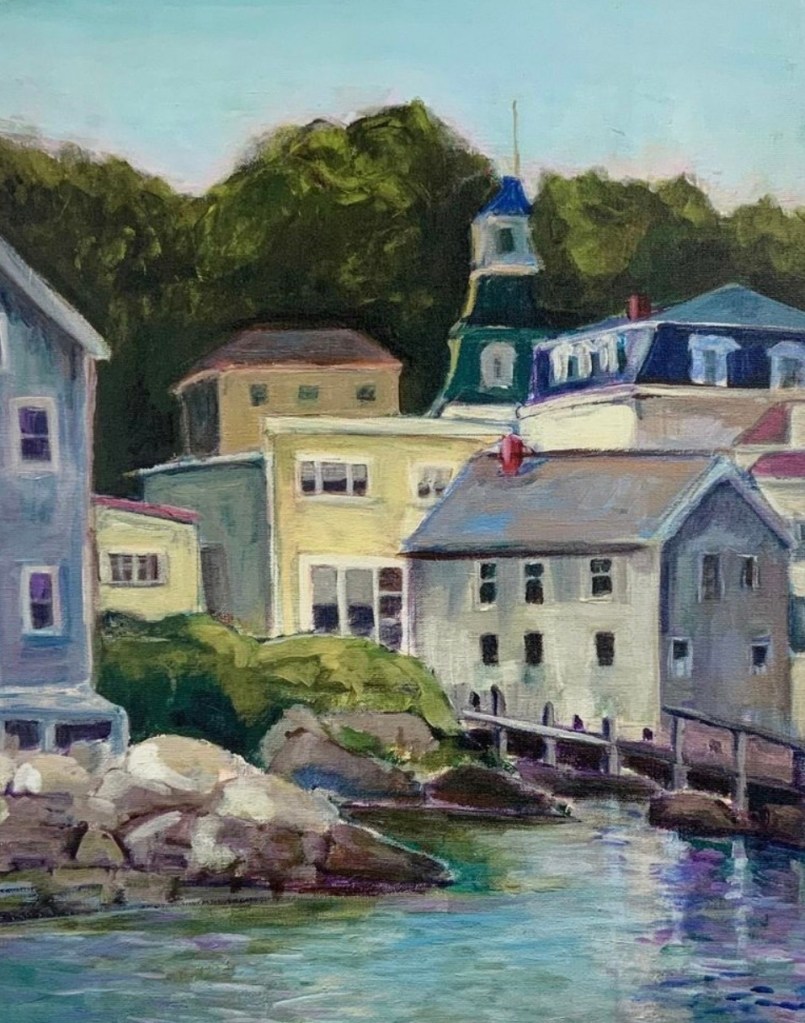
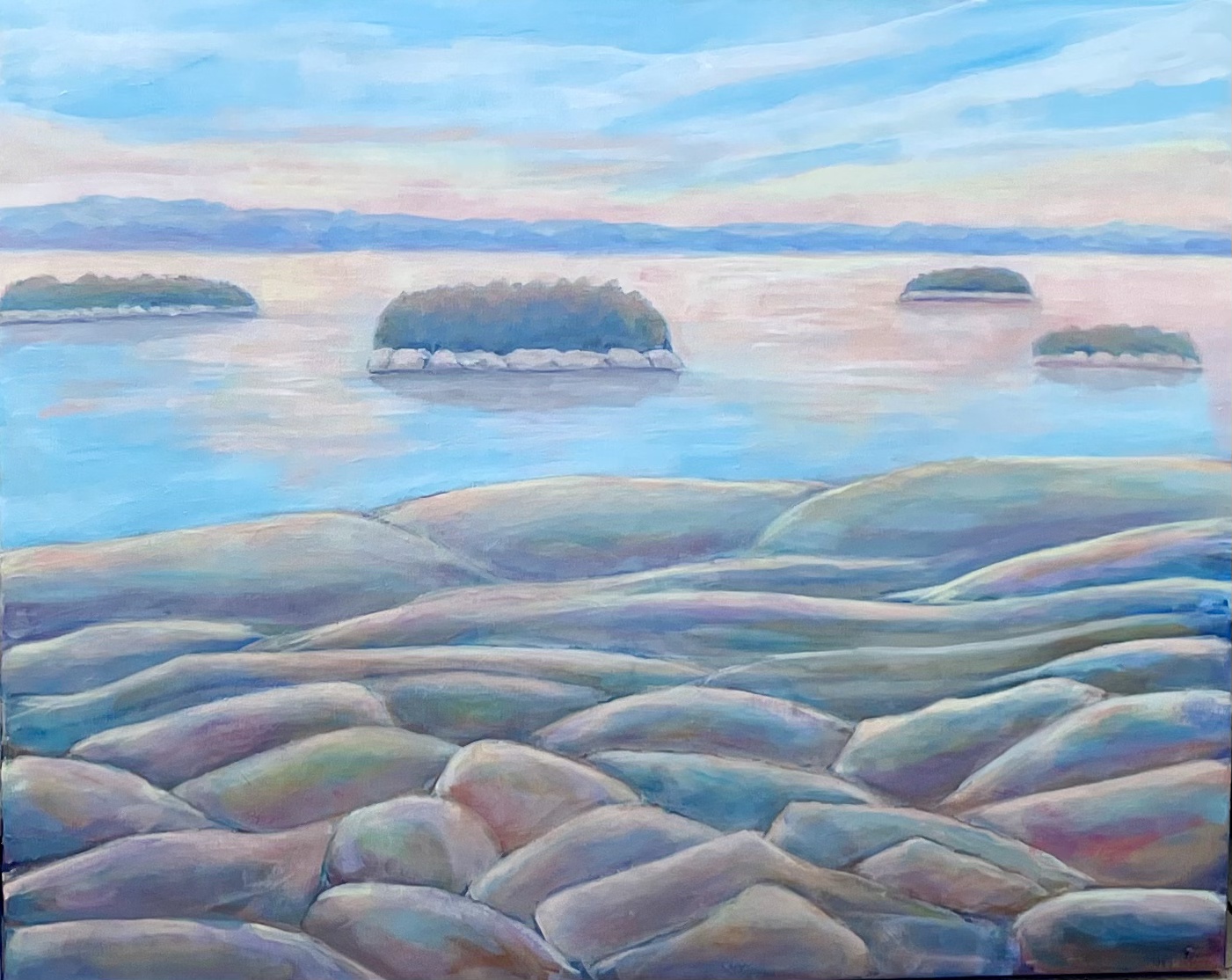
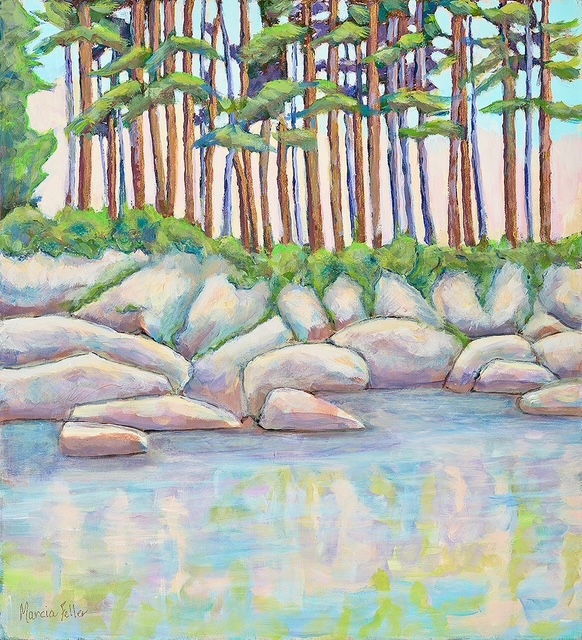
Maine Art Collective Artist, Marcia Feller’s art reflects her love of the ocean and particularly Stonington, Maine – A community built on the rocky Maine shoreline facing one hundred and eighty islands and the open North Atlantic. These images from her annual Solstice visits where she, her husband and friends rise in the dark of the night to sea kayak to an island for dawn of the longest day of the year, only then can you experience the magic and mystery that lead to her paintings.Marcia Feller Acrylic
Marcia Feller resides on an island in Casco Bay but for the longest days of the year; She, her husband and several other couples head to Stonington for a week of sea kayaking on the islands of Merchant Row and the Deer Isle Thorofare. On the longest day, they awake well before dawn so that they are on an island to celebrate summer Solstice with the magic of daybreak. The gentle light in her paintings that dawning light. As the day breaks and they later return to town, Marcia then captures the essences of this rocky granite community in the full daylight.
Acadia Summer Solstice – 24 x 30 Acrylic On Canvas in Maple Floater Frame Link First Light – Coots Island – 20 x 22 Acrylic on Canvas Framed Link
Experience the Connection
Following Abby’s presentation, visitors are invited to walk through the gallery and meet the artists whose work continues Maine’s rich artistic legacy.
Ask questions. Learn about their process. Discover what inspires them. See why they choose to live and create in Maine.
The Talk & Walk is an opportunity to connect Maine’s artistic history with the artists who are shaping its future.
We hope you’ll join us for this engaging exploration of Maine’s enduring creative spirit.
Maine Art Collective, 9 Mouton St, Portland, Maine
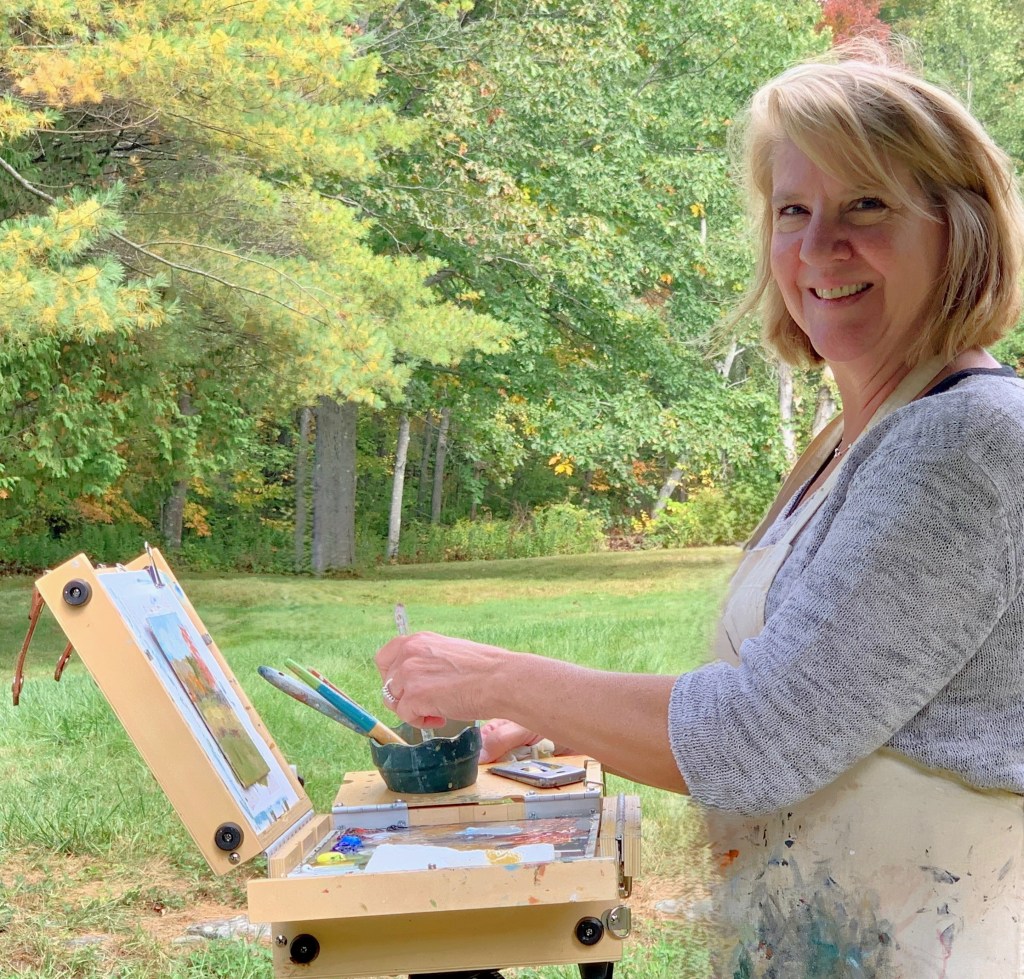
Meet the Artist: Stacy Lodato, First Friday, May 1, 5-8 PM.
Visit with Stacy, see her current artwork and learn about her art and inspirations.
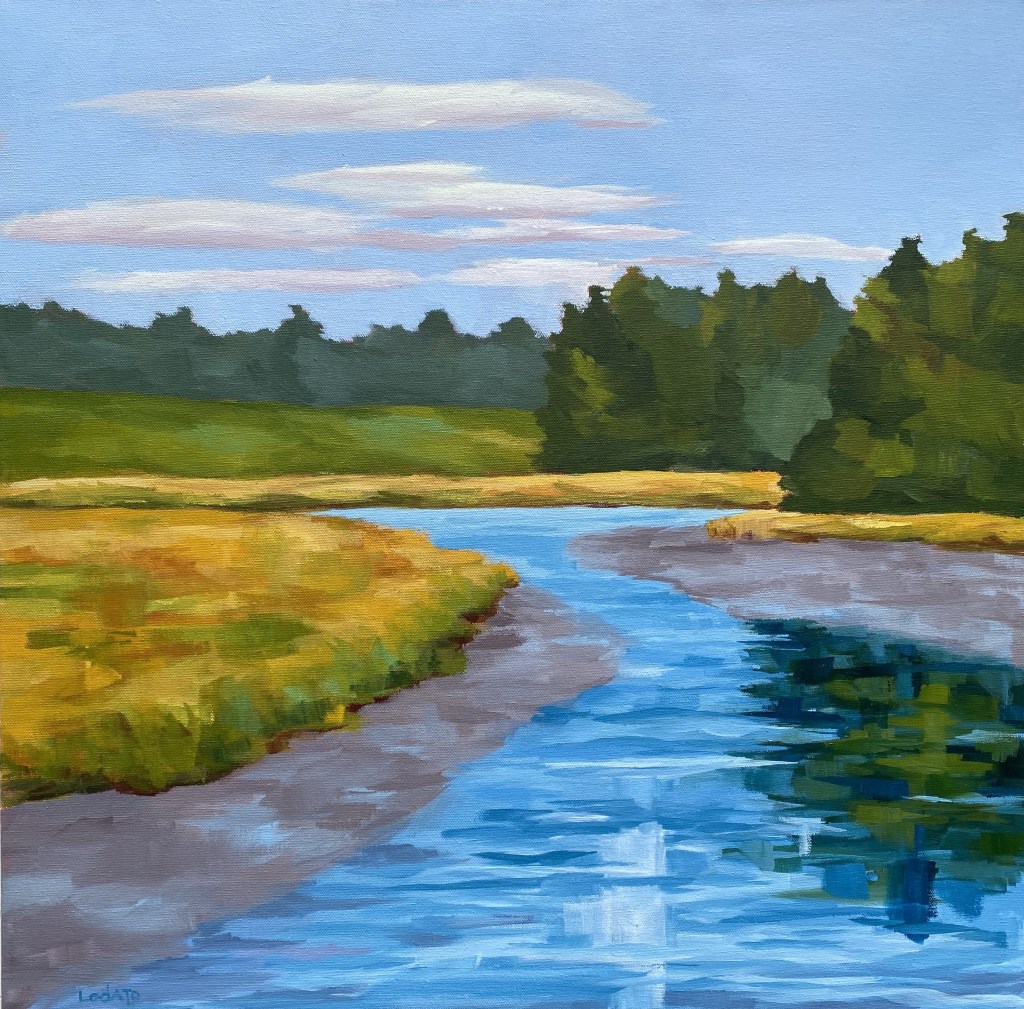
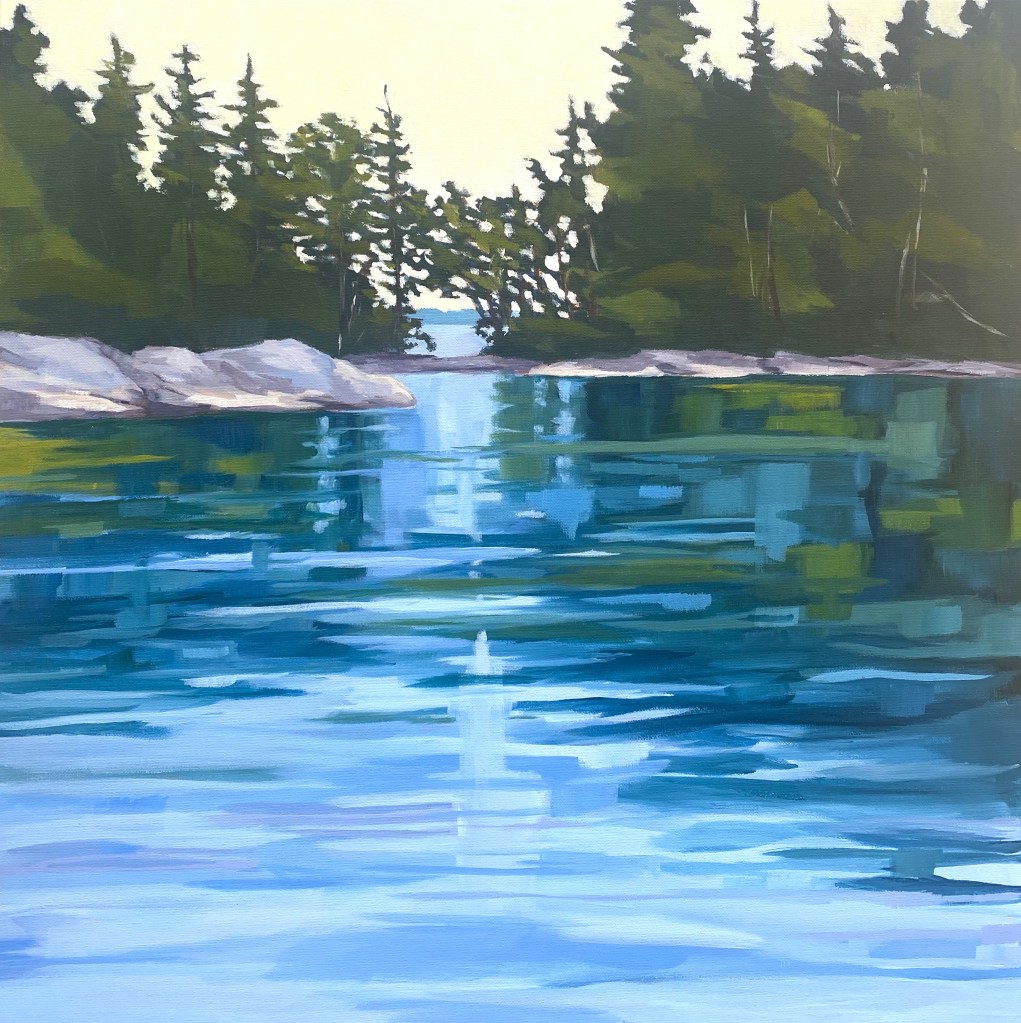
Saltwater Marshes, Seascapes and Landscapes
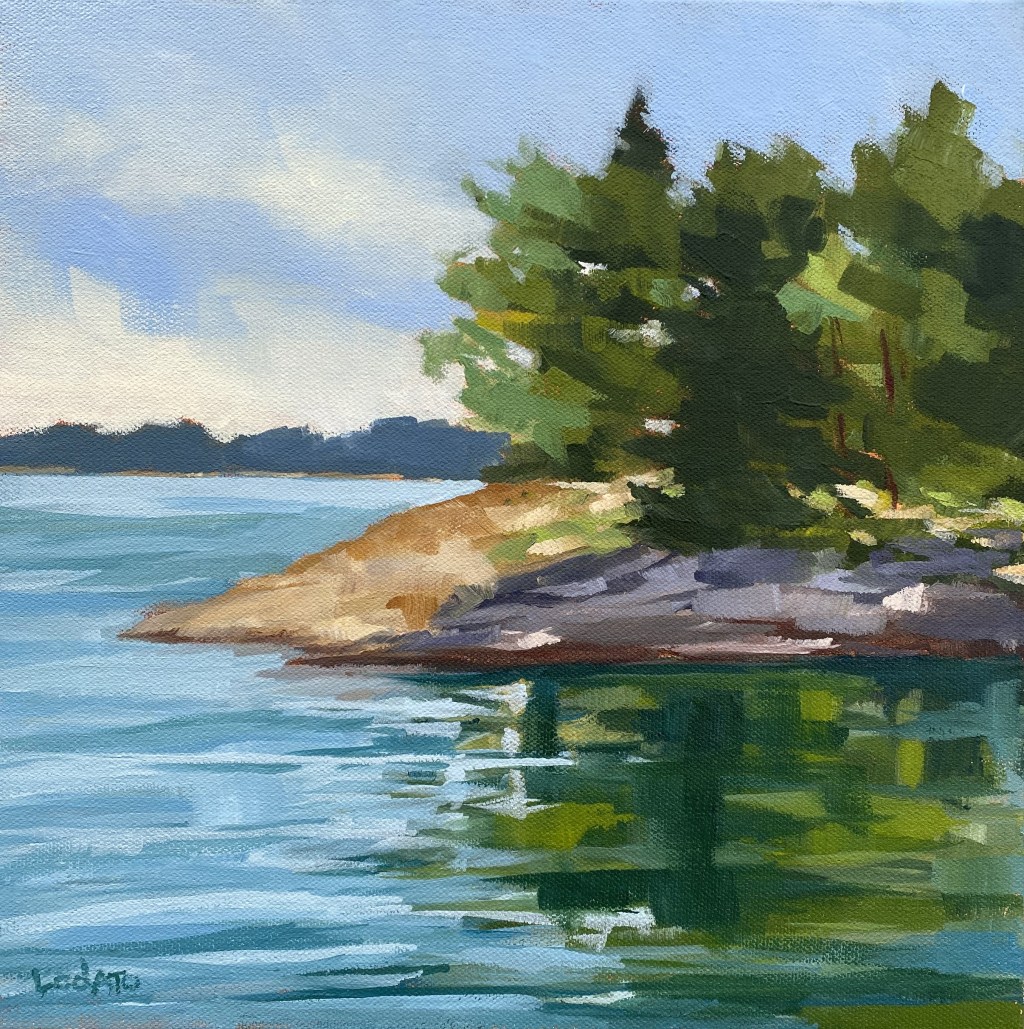
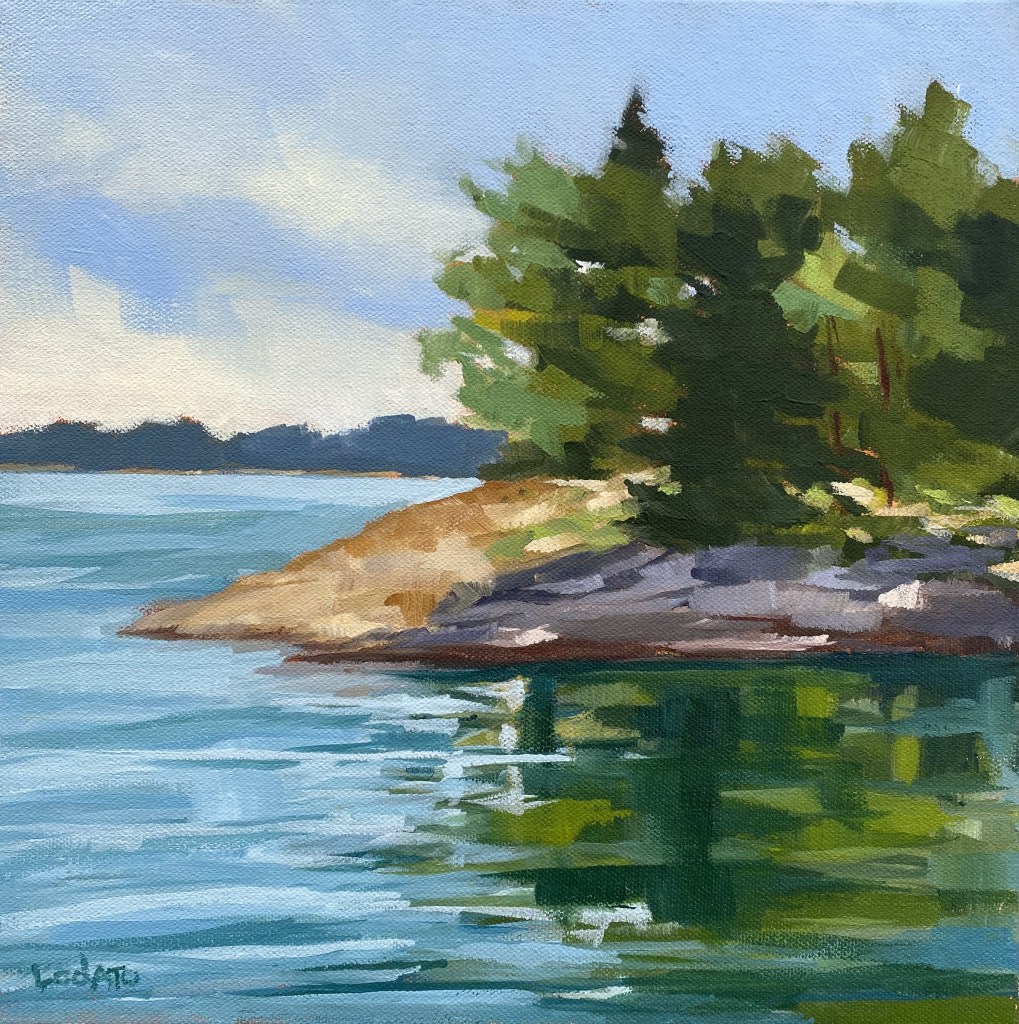
Shady Side Version 2
Stacey Lodato’s creative journey began at the University of Mississippi in Oxford, where she studied art and interior design. After two decades working with architectural and design firms, she founded SDL Designs—a full-service building and interior design company. Over the past ten years, Stacey has focused primarily on developing her art practice, bringing her talents to new heights.
As a founding member of the Meetinghouse Arts gallery in Freeport, Stacey played a pivotal role in its growth; serving on the board of directors from 2020 to 2024, then acting as gallery director and show curator until 2026. Today, she helping shape the local arts community through the gallery committee and as an artist member. Her art is also at the Maine Art Collective gallery on Moulton Street in Portland, Maine.
Stacey lives and works in Freeport, maintaining a full-time studio along Maine’s picturesque mid coast, drawing inspiration from the natural beauty around her.
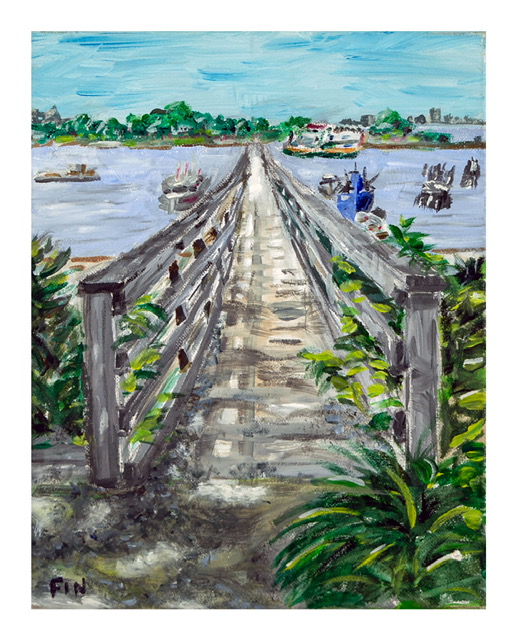
Skinny Water
ARTIST STATEMENT
Stacey’s paintings are deeply influenced by Maine’s saltwater marshes, landscapes, and seascapes. She enjoys exploring how objects interact to define shapes, light, color, and patterns. Working with a traditional palette of warm and cool colors, Stacey pays careful attention to values, aiming to create richness and visual interest in her pieces.
Experimentation is at the heart of her creative process. Stacey regularly tries new techniques, styles, and media—including printmaking, ceramics, and fiber arts. She participates in workshops and classes, both live and online, with artists such as Philip Frey, Patty Molica, Scott Gellatly, and Liz Prescott. For Stacey, art is an ever-evolving journey, and she embraces the excitement of continuous growth and exploration.
The story of Stacey Lodato is one of dedication, community involvement, and a passion for artistic discovery. Her work reflects the beauty of Maine and her commitment to lifelong learning, inspiring others to find creativity in their own journeys.
Between
Beyond it all, are the passions that drive Stacy to create. More directly from her.
A Creative Life: From Kitchen Tables to Studio Practice
For as long as I can remember, I’ve been drawn to making art.
Some of my earliest memories are of sitting at a friend’s kitchen table, completely captivated. Her older sister would always have a project spread out—paints, paper, fabric, something in progress. I would watch, fascinated, and whenever she invited us to join in, I was all in. There was something magical about the act of creating, about turning simple materials into something expressive and alive.
By the time I was in grade school, art had already claimed me. It wasn’t just a subject I enjoyed—it was the one that felt natural, intuitive, and endlessly engaging.
Growing Up Creative
My childhood was shaped not only by art, but by change. Our family moved frequently, and with each new home came a transformation. My mother would design and redesign every space we lived in, bringing personality and warmth into unfamiliar places. Some might describe her as having a “flair” for design—but to me, she was (and is) an artist. That was her medium, her way of expressing creativity.
So when people asked what I wanted to be when I grew up, the answer came easily: interior designer.
It felt like a natural extension of what I had seen and loved.
Learning the Language of Art
In college, I followed that instinct and studied art and design—but I didn’t want to limit myself. I took every class I could: watercolor, printmaking, painting, drawing, 3D design, even an introduction to graphic design. Each one offered a new way of seeing and making.
Later on, I explored ceramics as well, continuing to expand my creative vocabulary. That curiosity has never really left me. Even now, I’m drawn to workshops and classes—not just to learn new techniques, but to witness how other artists think, work, and solve creative problems. There’s always something to absorb, some new perspective to carry forward.
A Creative Career—and a Return
After college, interior design became both a career and a practical path forward. It allowed me to support myself while staying connected to creativity, much like my mother had done.
I spent 20 years working with architectural and design firms, building a career rooted in aesthetics, structure, and function. Then, after my son was born, I made the decision to go out on my own.
What followed was a gradual but meaningful shift—one that brought me back to a more personal, expressive art practice.
For the past 10 years, that has been my focus.
Inspiration Everywhere
People often ask if there was one artist who inspired me most. The truth is, there hasn’t been just one.
There have been dozens—traditional and contemporary artists whose work has excited me, challenged me, and expanded my thinking. Each has contributed something to the way I see and create.
But if I’m honest, the deepest influence came much earlier. It came from growing up in a creative environment—watching, absorbing, participating. That foundation made art feel not just like something I did, but something I needed to do.
Still Creating
Art has never been a straight path for me. It’s been something that’s woven through every stage of my life—sometimes in the foreground, sometimes running quietly in the background.
But it’s always been there.
And now, it feels like I’ve come full circle—back to creating for the sake of creating, grounded in a lifetime of experiences, influences, and curiosity.